Three sources will each tell you the "median home price" in Monticello, Florida, and they will each be right, and none of them will agree. As of September 2026, the median asking price for a home listed in Monticello sits at $426,000, working out to roughly $205 a square foot. Pull the countywide figure for Jefferson County instead, built from a broader mix of MLS listings, and the median drops to $302,000. Check the estimated value of a typical home in the 32344 zip code and you land closer to $311,764, a number that has climbed about 6.5 percent a year over the past five years.
None of these numbers are wrong. They are measuring three different things: what sellers are asking right now, what actually closes across the whole county including farmland and acreage, and what a valuation model thinks a typical property is worth regardless of what it's listed for. But the gap between them points to something more useful than a lesson in methodology. It points to the fact that Monticello isn't really one housing market. It's two, sharing a zip code and behaving nothing alike once you get past the front porch.
The Split Nobody Puts In One Chart
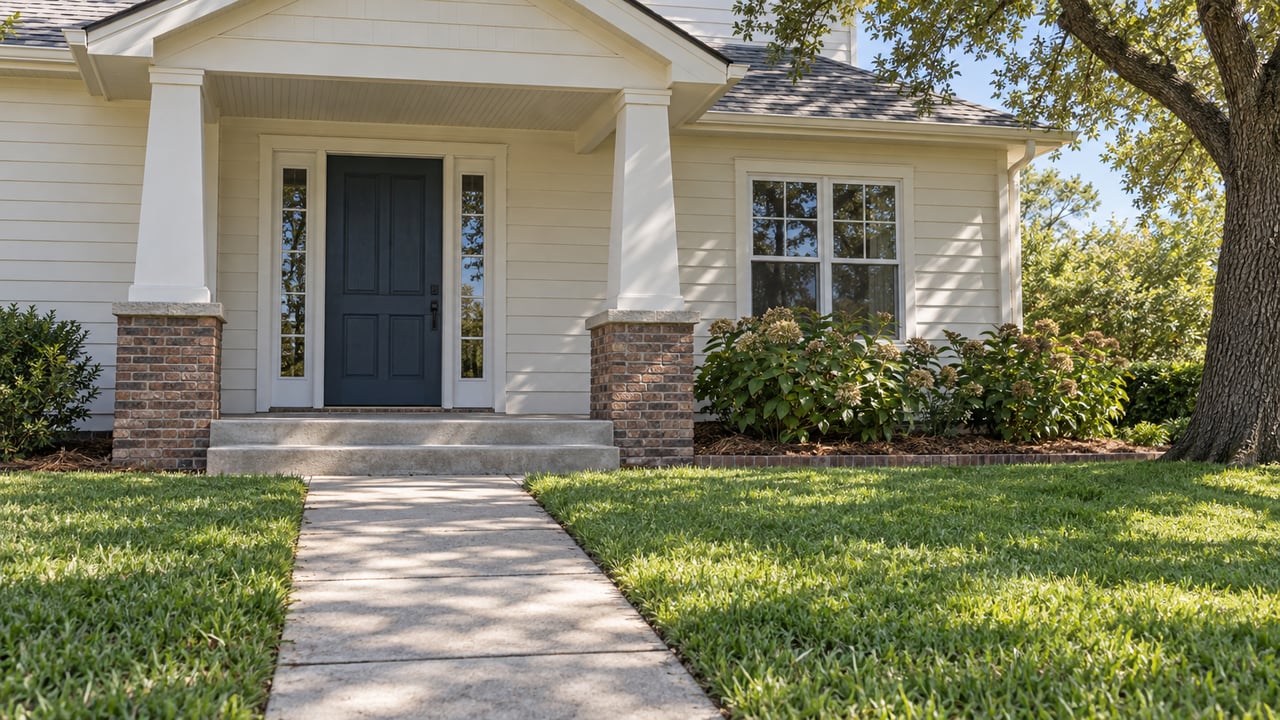
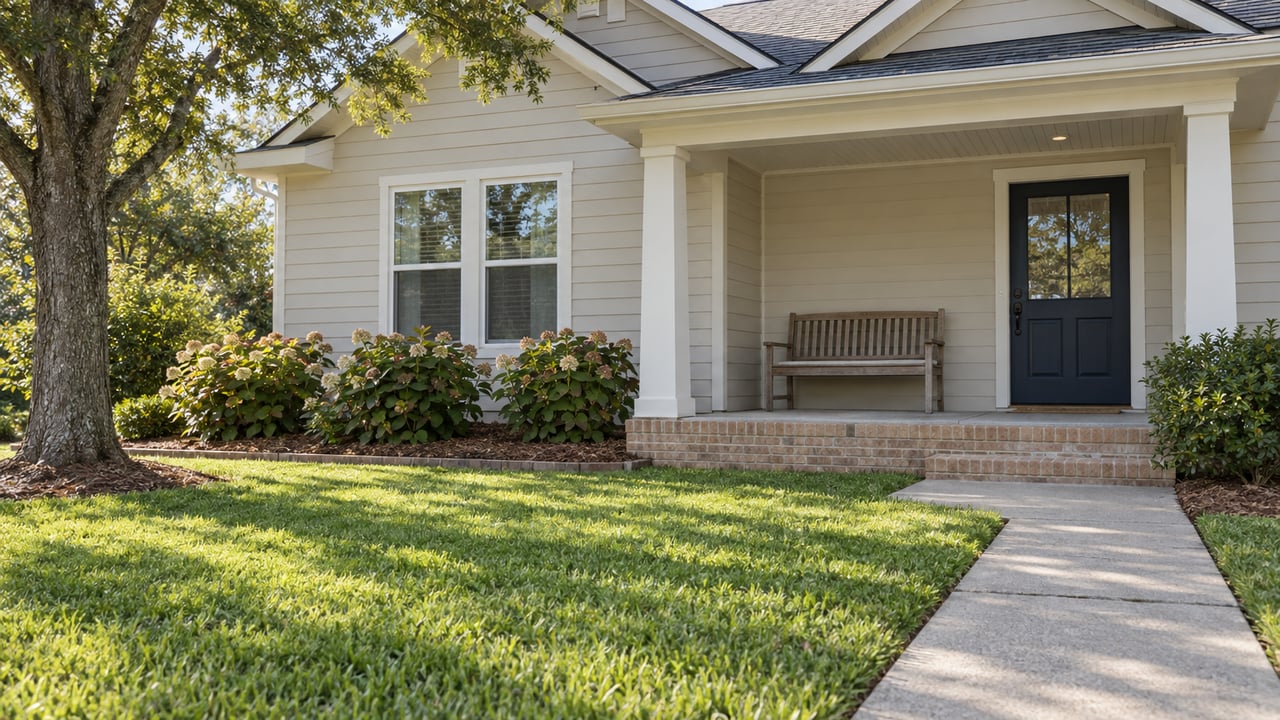
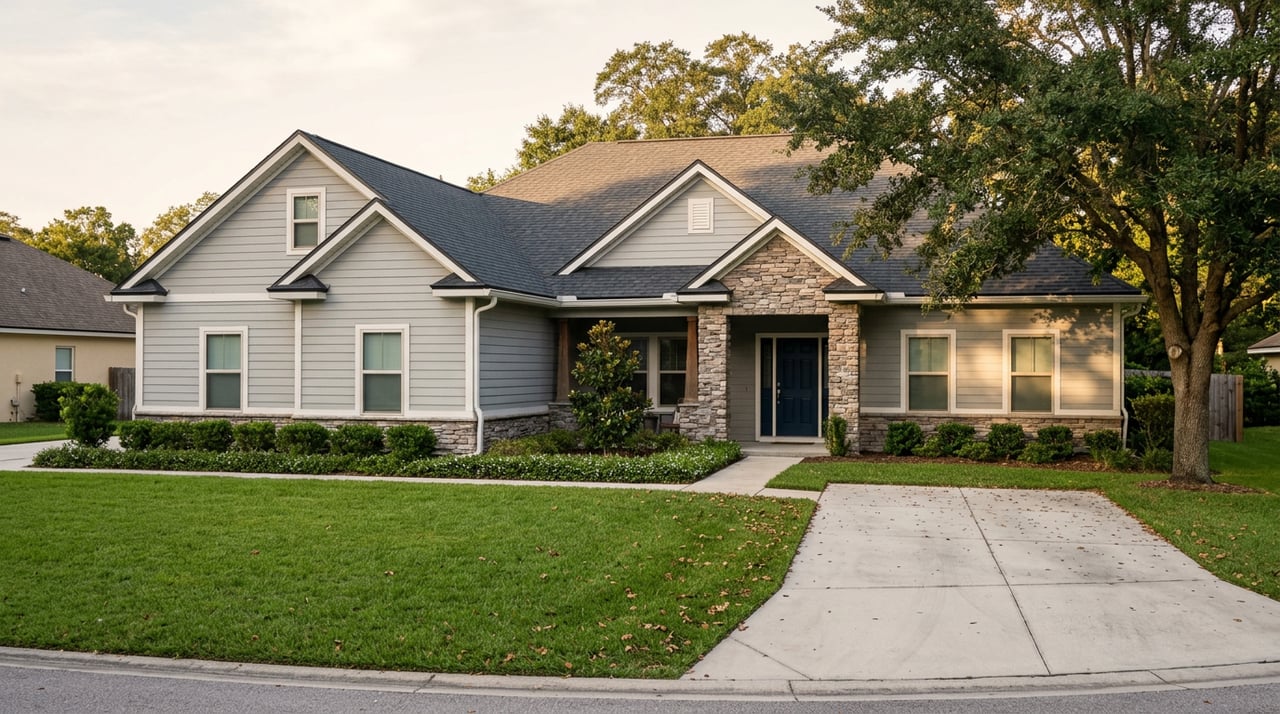
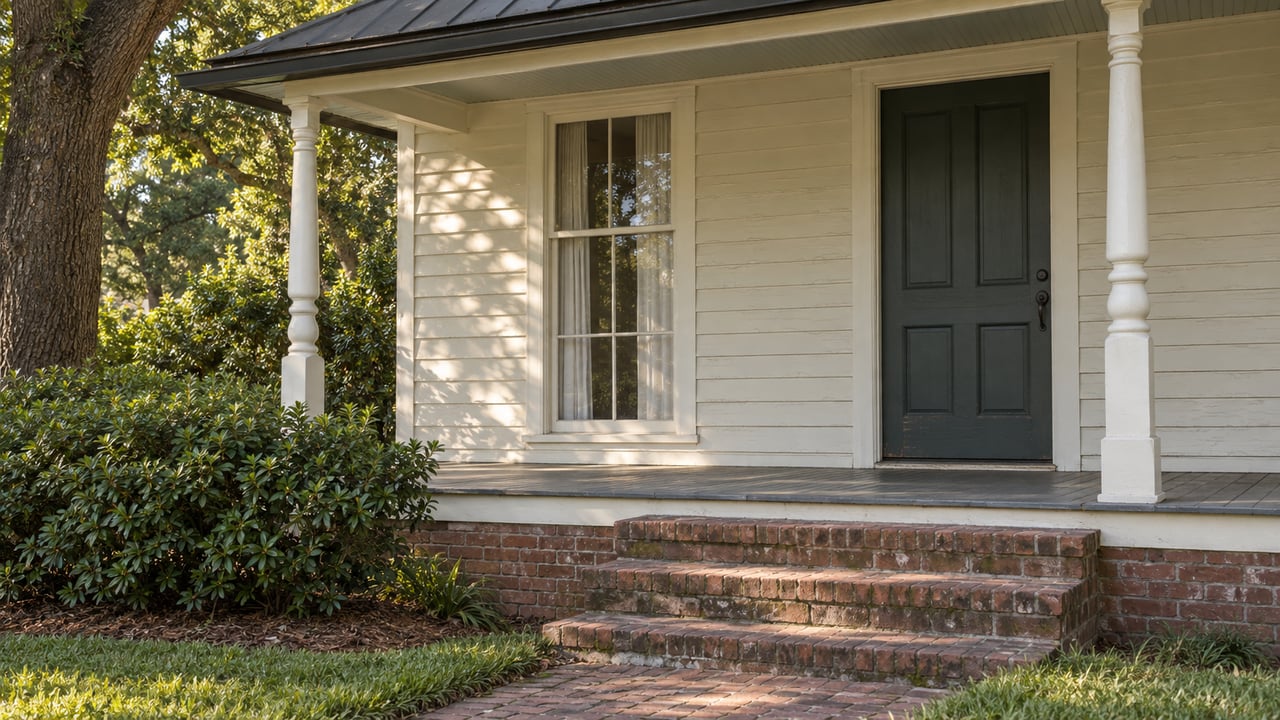
Walk two blocks in downtown Monticello and you'll pass a 1990s brick ranch, a 1970s block home with an updated roof, and a Victorian with a five-bay porch built by a 19th-century cotton merchant. All three might carry a similar asking price. Only one of them is going to take twice as long to close, and it's not the ranch.
Monticello's downtown core sits inside the Monticello Historic District, listed on the National Register of Historic Places since August 19, 1977. The district covers an irregular footprint along Madison, Jefferson, Dogwood, and Washington Streets and contains 41 contributing 19th-century buildings, a mix of Greek Revival, Classical Revival, and Italianate homes built mostly by planters and merchants after fires in 1875 and 1886 leveled the earlier commercial blocks. Washington Street in particular reads like a catalog of that rebuilding, wide porches and decorative woodwork from families who wanted their prosperity visible from the street.
That inventory is part of what draws buyers to Monticello in the first place. It's also part of why the September 2026 median time on market sits at 67 days, unchanged from a year earlier even as the median price ticked down. A ranch house with a 2015 roof doesn't have the same friction as a Greek Revival with original heart pine flooring, and lumping them into one median hides the fact that they're selling on two different timelines.
Where the Appraisal Stalls
The friction has a name, and it shows up before financing ever gets to closing: the appraisal.
An appraiser sets value by comparing a property to similar recent sales nearby. That's straightforward when you're pricing a three-bedroom brick ranch, because there are a dozen of them within a mile. It's a different exercise entirely on a one-of-a-kind historic home, where true comparable sales can be scarce, and mortgage lenders who work regularly with older properties point to that scarcity as the reason financing on historic homes takes longer and requires more documentation than a standard purchase.
This is not a reason to avoid buying a historic home in Monticello. It's a reason to expect the timeline to look different. A ranch house might appraise in a week with three clean comps. A Greek Revival on Washington Street might need an appraiser to widen the search radius, pull older sales, or make manual adjustments for square footage and lot size that don't map cleanly onto anything recently sold nearby. That extra step adds days, sometimes weeks, and it's a real part of why the historic side of Monticello's inventory sits longer than the median suggests.
The Insurance Line Item That Surprises Buyers
The second friction point shows up on the insurance quote, and it catches people off guard because most buyers price insurance last, after they've already fallen for the house.
Monticello agencies quoting the area put typical annual premiums somewhere between $1,800 and $3,500 depending on age, roof condition, and construction. Jefferson County as a whole runs cheaper on average, close to $1,152 a year according to one market report, largely because the county sits inland and avoids the coastal wind exposure that drives up premiums closer to the Gulf.
Older and historic homes don't get to claim that county average. A house that doesn't meet standard underwriting criteria, often because of roof age, original wiring, or plumbing, may not qualify for an HO-3 at all. In that case the fallback is an HO-8, a modified coverage form built for older homes. Florida All Risk explains that HO-8 policies only cover a specific list of named perils rather than the broader protection in a standard policy, and they typically settle claims on an Actual Cash Value basis, meaning depreciation gets factored in rather than paying full replacement cost. None of this includes flood coverage, which LiveCovered says no standard Florida homeowners policy carries regardless of the home's age, and which Jefferson County agencies specifically recommend adding given the area's creeks and low-lying pockets.
Add it up and a buyer comparing two houses at the same asking price in Monticello could be looking at meaningfully different carrying costs once insurance is priced correctly, not because one house is a worse deal, but because one of them is underwritten differently the moment it turns 50 or 60 years old.
What This Means If You're Comparing Monticello To Somewhere Else
If you're cross-shopping Monticello against Tallahassee's suburbs or another Big Bend town, the headline median price is the least useful number you'll find. What matters more is which side of Monticello's inventory you're actually comparing.
Buy on the newer end, a well-kept home built in the last few decades, and Monticello behaves close to what the county figures suggest: a median in the low $300,000s, standard financing, insurance in a predictable range. Buy in the historic core, and you're trading a longer appraisal process and a specialized insurance policy for a house with genuine architectural history, the kind of place where the Jefferson County Historical Association still operates out of the 1831 Wirick-Simmons House rather than a modern office, and where the 1909 courthouse anchors a downtown that has kept its shape for more than a century.
That friction is also where the negotiating room lives. A historic home that's been sitting past the 67-day median isn't necessarily overpriced. It may simply be waiting for a buyer whose lender has already lined up an appraiser comfortable with older housing stock and whose insurance agent has already priced the HO-8 option. Sellers of these homes often see fewer offers not because demand is weak, but because fewer buyers have done that homework before they start touring. If you have, you're negotiating against a smaller pool than the asking price implies.
A Few Quick Answers
Does every home in downtown Monticello require an HO-8 policy? No. Age and condition drive the decision, not location alone. A well-maintained home from the historic district with an updated roof and rewired electrical can often still qualify for a standard HO-3. The HO-8 becomes relevant when a home's rebuild cost or original systems don't meet a standard carrier's underwriting.
Standard homeowners policies exclude flood damage regardless, so it's worth checking flood zone status and pricing a separate policy before you're deep into a contract.
Why would a historic home take longer to close than a newer one at the same price? The appraisal is usually the bottleneck. Fewer comparable sales nearby means more time for the appraiser to document value, and financing can't move faster than that step clears.
If you're weighing a historic home in Monticello against something newer, the earlier you line up a lender and insurance agent who've done this before, the shorter that timeline gets. Trey Cooper III can walk you through what a specific property's carrying costs actually look like, insurance included, before you write an offer. Get your free home valuation and let's start with real numbers instead of a headline median.
This article is general information, not legal, tax or financial advice. Consult a qualified professional about your situation.